Guides
Acacia Decking and Ventilated Facades
How to pick acacia deck boards by thickness and grade, set joist spacing, and why acacia cladding needs a ventilated facade to dry out.
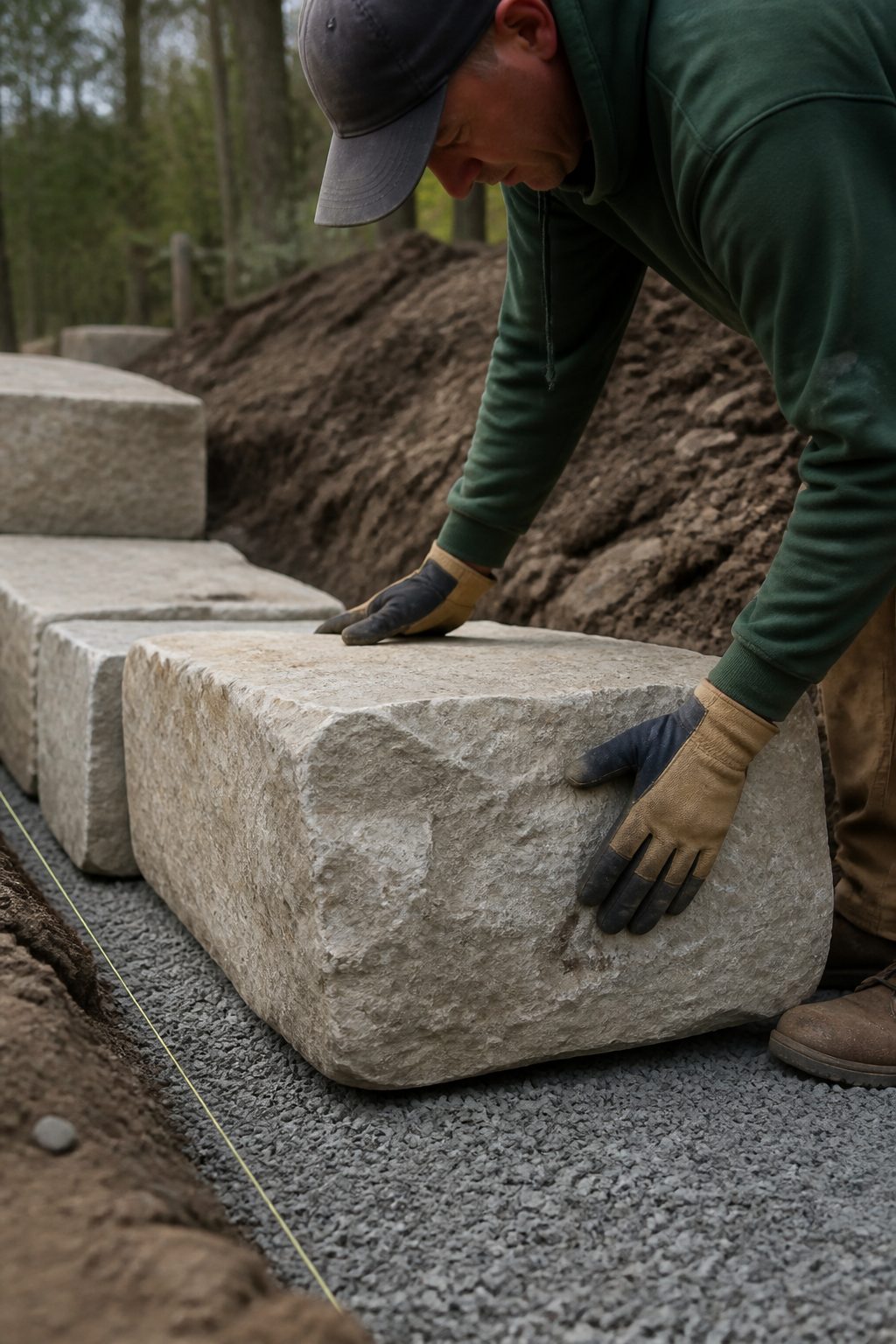
Acacia deck boards are chosen by thickness first: 25 to 28 mm for terraces on the ground or over a solid base, 32 to 40 mm where joists sit far apart or the deck carries heavy furniture. Grade decides how much of the board is clear face and how much is knot and sapwood, and the two together set the price. Joist spacing follows thickness, not taste: 400 to 500 mm centres for 25 to 28 mm boards, 600 mm for 32 mm and up. A ventilated facade is a rainscreen, a gap of 20 to 40 mm between the cladding and the wall, open at top and bottom, and acacia needs it because the wood moves with moisture and will not dry if it is nailed flat against a wall.
How do you choose acacia deck boards by thickness and grade?
Thickness is a structural number. A board 25 mm thick spans about 400 mm between joists before it starts to feel soft underfoot. A board 32 mm thick spans 600 mm. A board 40 mm thick is used where the deck sits over a roof membrane, where a vehicle crosses it, or where the joists cannot be doubled up. The rule is simple: the thinner the board, the closer the joists.
Grade is a visual and durability number. The best grade, often sold as select or A, is mostly heartwood, straight grain, few knots, and it takes an oil finish evenly. A middle grade, sometimes called standard or B, carries knots and some sapwood, which is the pale wood just under the bark. Sapwood has less rot resistance than heartwood, so it is kept out of the walking surface where possible. A utility grade is used for the underside of a deck, for a shed floor, or for a compost frame.
Robinia pseudoacacia, the black locust, produces a hard, dense heartwood. Density runs around 700 to 800 kg per cubic metre at 12 percent moisture content, which is why a 32 mm board feels heavier than a pine board of the same size. That density is also why the wood holds a screw and why it weathers to a grey brown without paint. A reader who wants the Slovak-language detail on grades, thicknesses and the comparison with teak, ipe and cumaru can read terasové dosky z agátu výber at acaciawood.eu, a magazine that covers acacia for outdoor use and does not sell timber.
Two checks before buying. First, ask for the moisture content of the batch; deck boards should arrive at 12 to 16 percent, not green. Second, look at the end grain: tight rings and a dark centre mean heartwood, a wide pale ring means sapwood. A board with a pale ring on all four faces will move more and grey faster.
What joist spacing does an acacia deck need?
Joist spacing is set by board thickness, board width and the load. For a domestic terrace, 400 mm centres under 25 to 28 mm boards and 600 mm centres under 32 mm boards are the working numbers. Boards 140 mm wide and wider need the closer figure even when thick, because a wide board cups more than a narrow one.
Joists themselves are usually 45 by 70 mm or 50 by 75 mm, set on adjustable pedestals, on concrete pads, or on a timber frame above the ground. They run perpendicular to the boards. The gap between boards is 4 to 6 mm, which lets water off the surface and lets air move under it. A gap of 2 mm clogs with leaf litter; a gap of 10 mm catches heels.
Fixings matter as much as spacing. Stainless steel screws, 5 mm diameter, two per board per joist, pre-drilled near the ends to stop splitting. Acacia is dense, so a pilot hole is not optional. Leave 1 to 2 mm between board ends and 10 mm at a wall or a step, because the wood will swell in a wet autumn.
Under the deck, keep 100 mm of clear air if the ground is soil, and slope the ground away from the house. A deck over a sealed surface needs drainage, not a sand bed. If the joists sit on the ground, use a rot-resistant species or a plastic shim; acacia joists are available but cost more than treated softwood.
What is a ventilated facade and why does acacia need one?
A ventilated facade, also called a rainscreen, is a wall covering fixed on battens, with a continuous air gap behind the cladding. The gap runs from a vent at the bottom to a vent at the top, so air rises and carries moisture out. The cladding keeps rain off; the gap keeps the back of the cladding dry.
Acacia needs that gap for two reasons. First, the wood takes on and gives off moisture with the weather. A board fixed tight to a wall cannot dry on its back face, and the back face is where rot starts. Second, acacia moves more along its width than along its length, so a board nailed hard to a solid wall will split or pull its fixings when it swells. Battens of 30 to 40 mm give the board room to move and a path for air.
The build-up is straightforward. A drained and breathable membrane goes on the wall. Vertical or horizontal battens are fixed through the membrane into the structure, at 400 to 600 mm centres. The acacia cladding is screwed to the battens with stainless screws, one fixing per board per batten, in a slotted hole where the board crosses a batten. The bottom of the wall gets an insect mesh and a drip edge; the top gets an open vent or a perforated closure.
Horizontal cladding needs a drained cavity at each board, so the board profile is usually tongue and groove or shiplap with a 5 mm shadow gap. Vertical cladding on horizontal battens sheds water better in driving rain, but it needs a counter batten to keep the vertical cavity open. Either way, the gap is the point.
How does acacia behave outside over time?
Acacia left bare greys to a silver brown within a year or two. That greying is a surface change, not decay; the wood under it stays sound if water drains and air moves. A finish slows the change. A penetrating oil with a UV filter, applied thin and repeated every 12 to 18 months, keeps the colour closer to new. A film-forming varnish is a poor choice outside, because it cracks and traps water.
Cleaning is annual and dull. A stiff brush, water, and a mild oxygen bleach for algae. No pressure washer above 50 bar, because it raises the grain and opens checks. Sanding a grey deck back to colour is possible but removes the surface that has already settled, and the deck will grey again.
Acacia is not a tropical hardwood and does not pretend to be. It grows in Europe, it is dense, and it is durable in the ground-contact class when the heartwood is used. The trade-off is movement and a limited supply of wide, clear boards. A deck built with 28 mm boards at 400 mm centres, stainless screws, and 5 mm gaps will outlast a deck built with thicker boards on wider joists and no gap, because water leaves the first one.
What to check before the boards arrive
Measure the span between joists and write it down. Order thickness to match that span, not the other way round. Ask for the grade in writing and check the end grain on delivery. Set the joists level, with a fall of 1 to 2 percent away from the house. Keep the boards under cover and off the ground until they are fixed. Fix them with stainless screws and pilot holes. Leave the gaps. If the same boards are going on a wall, build the ventilated cavity first, because retrofitting a gap behind cladding is a rebuild, not a repair.