Guides
Wood in the House: Species, Joints, Finish
A practical guide to choosing wood species, reading joints, and finishing interior woodwork, with density and hardness figures that decide where each board
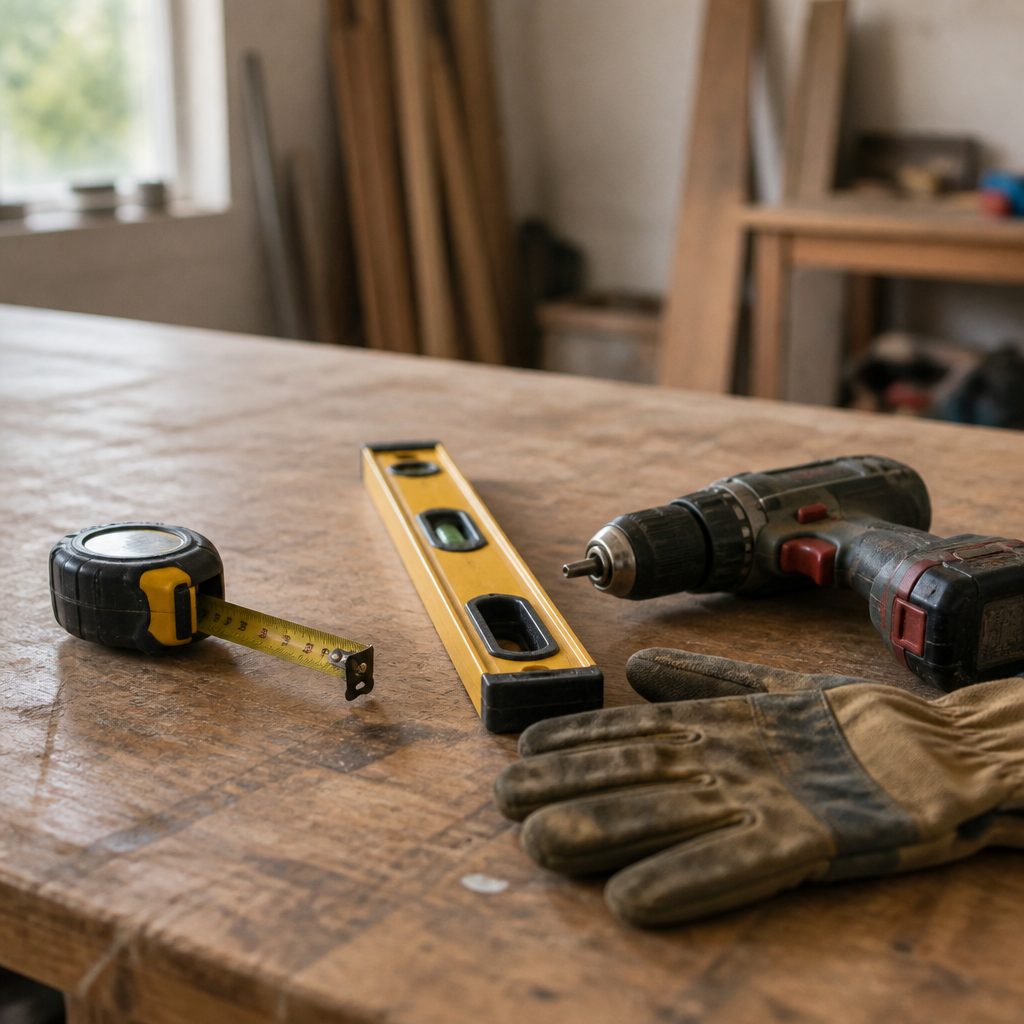
Wood in a house is a set of decisions made before anyone sees the result. The species decides how the board wears, the joint decides whether the piece stays square, and the finish decides how often you touch it again. Get those three in order and interior woodwork lasts decades without drama.
What decides where a board can go?
Density and hardness set the limit. Oak sits around 700 kg per cubic meter at 12 percent moisture content, beech near 720, ash around 680. The numbers are close, which is why the three get confused in conversation, but they behave differently under a plane and under a foot.
Beech is the hardest of the three in common use and the least stable. Its shrinkage from green to dry runs high, so a wide beech panel moves more between seasons than the same panel in oak. That is why beech ends up in chairs, drawer sides, workbench tops, and school furniture, places where the piece is narrow or mechanically held. A 600 mm beech tabletop in a dry room will show a gap at the seam by February.
Oak moves less and takes impact better. It also reacts with iron: a steel screw in green or damp oak leaves a black stain that bleeds into the grain. Use brass, stainless, or a pilot hole and a coated screw. Oak is the default for thresholds, stair treads, and anything within a meter of a door.
Ash bends well when steamed and holds a long grain figure that reads as movement across a wide surface. It is lighter in tone than oak and slightly softer, so it suits handrails, cabinet fronts, and interior doors where the surface is touched but not scuffed.
For readers who want the full figures per species, including shrinkage percentages and typical uses, a German workshop magazine keeps species sheets on oak, beech, and ash alongside its tool and joint articles at wood species sheets and workshop technique. The same reference covers sharpening planes, saws, and chisels, which matters more than species choice once the board is on the bench.
Which joint holds a piece of furniture square?
A joint is a bet on movement. The mortise and tenon bets that the rail and the leg will move together. Cut the tenon at one third the thickness of the rail, no more, and leave a hair of clearance on the shoulders so the joint closes on the shoulder, not on the tenon cheek. A 40 mm rail gets a 13 mm tenon. Glue alone will not hold a loose tenon; the fit does the work.
Dovetails bet on tension across the grain. The pins and tails resist pull in one direction and shear in the other, which is why a drawer box built with dovetails stays tight after ten thousand openings. The angle runs between 1:6 and 1:8 for most hardwoods. Softer wood wants the steeper angle.
Dowels and biscuits are alignment aids, not structure. A biscuit joint in a 20 mm oak panel adds little strength; it keeps the boards flush while the glue cures. Use them for panel glue-ups and for cabinet carcasses that will be fixed to a wall.
Screws and pocket holes are fast and honest if you accept the trade. They concentrate stress at the head, they do not tolerate seasonal movement, and they show if the piece is ever disassembled. In painted work, that is fine. In a visible oak frame, it is a repair waiting to happen.
How does a finish change the maintenance schedule?
Oil, wax, varnish, and shellac sit on a spectrum from repairable to durable.
Oil penetrates and leaves the grain open. A hardwax oil on an oak floor needs a refresh every two to four years in a hallway and every five to seven in a bedroom. The repair is local: sand the worn patch, re-oil, blend. No lap marks if you work the whole board.
Wax sits on top and gives a low sheen that suits period furniture. It offers almost no water resistance. A waxed table needs a coaster and a reapplication every few months.
Varnish, including polyurethane, builds a film. It resists water and abrasion and it fails by peeling at the edges once moisture gets under the film. Repair means stripping the whole surface. Use it on stairs, kitchen counters, and children's furniture.
Shellac dries in minutes, sticks to almost anything, and dissolves in alcohol. It is the finish for repair work and for pieces that will be handled: a shellac French polish on a chair arm can be touched up with a pad in ten minutes.
The rule that saves time: match the finish to the repair you are willing to do. A floor you will never strip should be oiled. A counter you will never oil should be varnished.
What does a wooden stair ask of the house?
A stair is a formula before it is a piece of joinery. Two risers plus one tread should land between 600 and 640 mm. A 180 mm riser pairs with a 280 mm tread, which gives 640. A 190 mm riser pairs with a 250 mm tread, which gives 630. Headroom above the nosing line needs 2000 mm minimum, and 2100 is comfortable.
Wood choice follows traffic. Oak treads on a pine stringer is the common compromise: the wearing surface is hard, the structure is light and cheap. Beech treads are harder but noisier and move more, so they need wider gaps at the wall. Ash is a middle option and takes a clear finish well.
Squeaks come from movement between tread and riser, not from the wood itself. Glue and screw the tread to the riser, not just to the stringer, and the noise stops.
Where does interior woodwork fail first?
Windows and doors fail at the bottom rail and the sill, where water sits. Check the paint film there every two years. A crack smaller than a credit card is a repaint; a crack that lets a knife blade in is a repair.
Water sits on horizontal surfaces. A sill without a drip groove under the overhang pulls water back to the wall by capillary action. A 10 mm groove cut 15 mm back from the edge breaks that path.
Interior doors fail at the lock stile, where the latch strikes. A strike plate screwed into softwood with two 20 mm screws will loosen within a year. Use 75 mm screws that reach the stud, and the door stops shifting.
Furniture fails at the joint between a rail and a leg, usually because the joint was glued without clearance and the wood shrank away from the glue line. A repair with a glued wedge and a clamp buys another decade.
How do you keep a house's woodwork in service?
Keep a written record per room: species, finish, date applied, and the next date due. A house journal with a page per window and a page per floor removes the guesswork. When the hallway floor comes due, you know what product was used and how many coats it took.
Inspect in the same season each year. Wood moves with humidity, and a door that sticks in July may clear in October without any work. Adjusting a hinge in July is wasted effort; adjusting it in October holds.
Keep a small kit: a scraper, a pad of shellac, a tin of the floor oil, a tube of matching filler, and a screwdriver that fits the hinge screws. Most woodwork failures in a house are small, local, and cheap to fix if they are caught in the first year and expensive if they are caught in the fifth.
The material rewards attention at the start. Choose the species for the load, cut the joint for the movement, finish for the repair you will actually do, and the woodwork outlasts the paint on the walls around it.