Guides
Leather Furniture in a House That Works
Leather is the upholstery that tolerates a working household, if the finish is read before buying and the maintenance is kept small and regular. What aniline and pigmented hides each ask, and what light and dry air do.
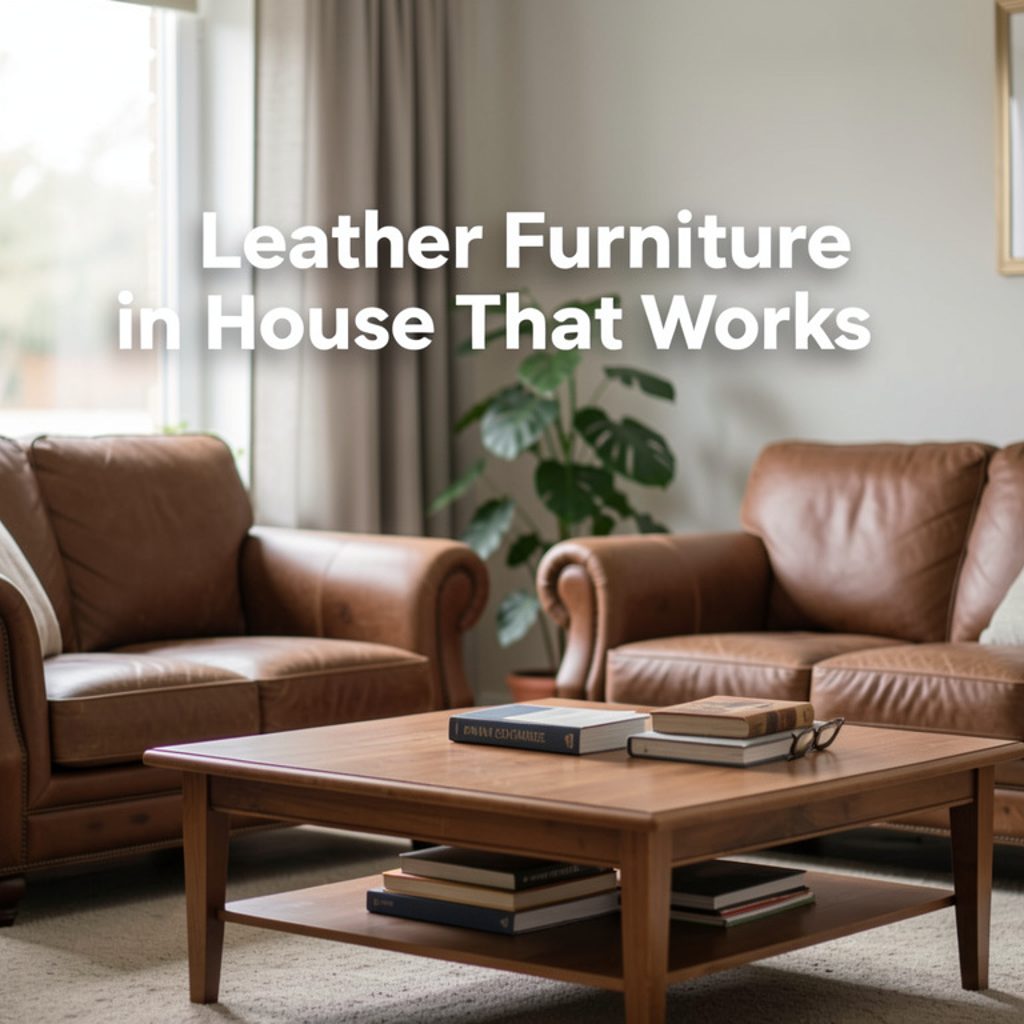
Leather survives a working house better than most fabrics, but only when the finish was matched to the room before purchase. Pigmented leather forgives; aniline leather records. Everything else, the cleaning, the conditioning, the repairs, follows from knowing which one is in the room.
Which finish belongs in a busy room?
The trade names are worth learning because they predict behaviour. Aniline is dyed but not coated, so it stays soft and shows everything: sun fading, body oil, the dog's paw print. Pigmented leather carries a coloured protective coating, sits slightly firmer, and shrugs off the same week without comment. Nubuck and suede sit at the fragile end: lovely, dry-brushed, and unwise beside a mudroom door.
A household with children, a dog or a chair that earns its keep should read pigmented or protected leather first. The choice is the same one this site makes about floors, where the covering is judged on what it does rather than how it photographs, as in the notes on carpet's actual job in a room.
What does light and dry air do to a hide?
Sunlight fades and dries, and a sofa under a south window ages unevenly: the patch behind the cushion tells the truth about the patch in the light. Heat sources do the same work faster, which is why a leather chair beside a radiator cracks before its twin across the room shows wear. The fix is placement and rotation, the same sacrificial-layer thinking that governs a rug in a bright spot.
Leather Naturally publishes the industry's reference on leather types, finishes and care for readers who want the material's own documentation rather than a furniture shop's version.
What does maintenance actually look like?
Dust and grit are the abrasive; a soft cloth weekly and a vacuum with the brush head is most of the job. Spills blot, never rub, and the cloth is damp rather than wet. Conditioner is the second line: a hide that has gone dry and tight wants feeding a few times a year, tested first on the panel nobody sees, because the wrong product on aniline can darken it permanently.
For repair, cleaning and the difference between a finish that needs cleaning and a finish that needs refinishing, the guide at metroleather.com keeps leather care, finishes and repair for furniture and car seats in one practical place, from blotting a spill to reading a crack that means the colour layer is gone.
When is a repair worth it?
A good hide on a good frame is worth repairing; bonded leather, the ground-up product sold under the same word, is not, because its surface is a coating that peels rather than a skin that can be reworked. The distinction is a purchase question, not a repair question: buy full or top grain on a frame with a warranty, and the chair becomes a maintained object instead of a disposable one.
That is the house's logic applied to furniture. Buy the thing that can be serviced, keep the service small and regular, and let the room look used rather than new. The wardrobe version of the same discipline is in the laundry routine that keeps clothes in service, and the written version lives in the house journal.