Guides
What a Clay Tile Roof Asks of Its Owner
A clay tile roof outlasts almost everything on the house and fails differently: not in the field but at the flashings, the fasteners and the feet of the people who walk on it. What the inspection looks like and which repairs belong to specialists.
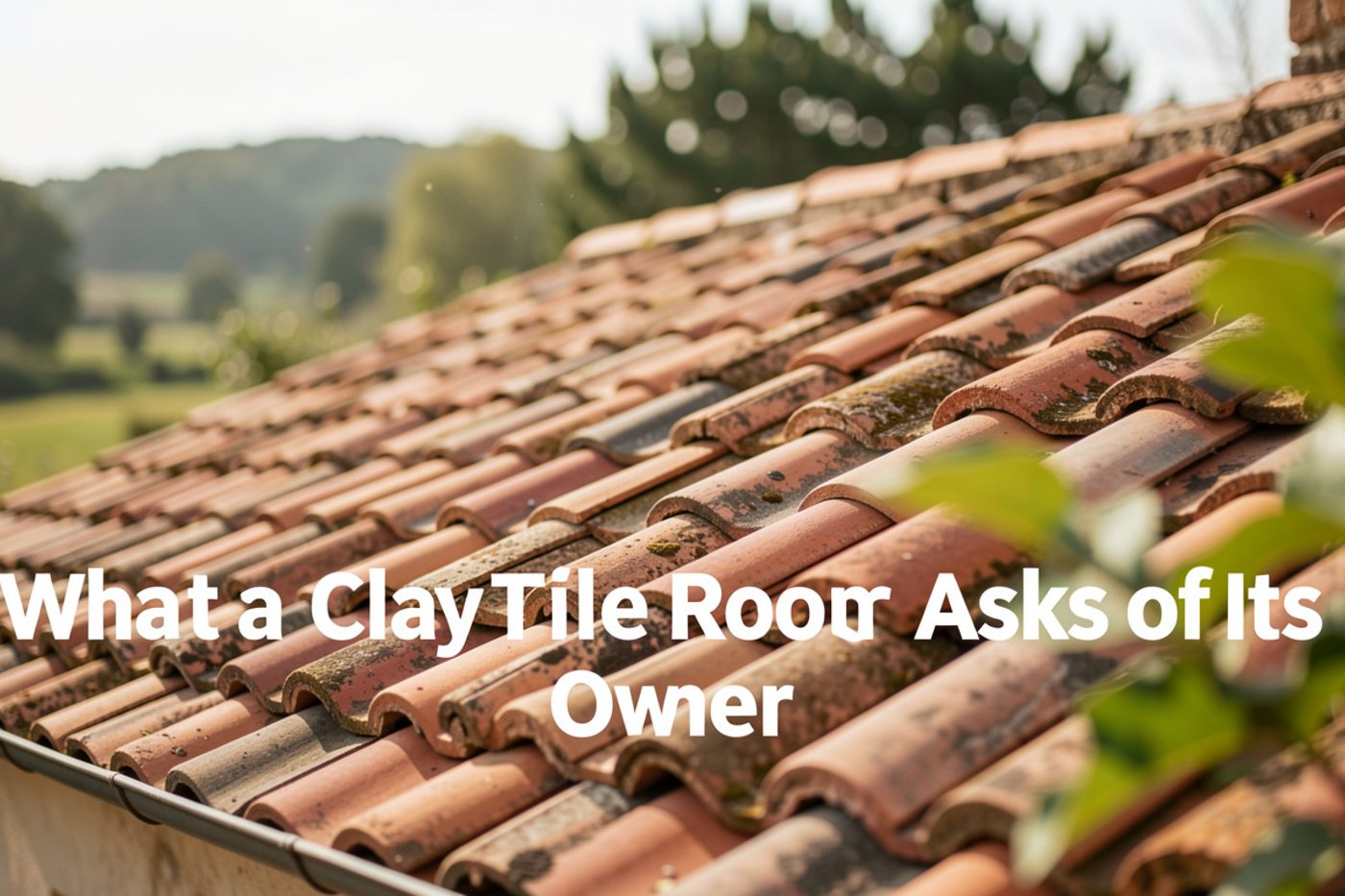
A clay tile roof can run fifty to a hundred years, but the tile is the skin, not the system. What actually ages is the underlayment, the flashings and the fasteners underneath, so the roof's real maintenance calendar belongs to the parts nobody sees from the street.
That changes the owner's job. On a tile roof the tile is inspected, not replaced on a schedule, and the first skill is knowing that the material itself is probably fine.
How often should a clay tile roof be inspected?
From the ground, every season and after any storm that moved debris. From a ladder at the eaves, once a year: look for slipped or cracked tiles, mortar or foam failure at ridges and hips, debris dams in the valleys, and the condition of flashing at every wall, chimney and penetration. Binoculars and a camera on a zoom lens cover most of it; the roof itself is not a walkway.
The reason for restraint is the material. Clay tile is hard and brittle, and a foot placed on the unsupported centre of a barrel tile breaks it. Professional roofers walk the lower third of each tile where it bears on the one below, and anyone without that habit does more damage in an afternoon than weather does in a decade. Inspection from the ground is not a compromise; it is the correct method.
What upkeep does a Spanish style house add to a maintenance calendar?
The roofline is only the start. Stucco wants cracks read annually and sealed before water gets behind the skin; deep eaves and exposed rafter tails want their paint or stain renewed on schedule because the wood is doing structural work; and the courtyard that makes the house also concentrates runoff, so its drains and scuppers join the gutter check. Wrought iron wants rust arrested at the first orange bloom. None of it is difficult, but all of it is calendar work, the same discipline described in keeping a house journal that gets read.
Under the tiles, the underlayment is the actual waterproofing, and it has its own lifespan independent of the tile above it. When it fails, the fix is a lift-and-relay: tiles off, new membrane, same tiles back. That is specialist work with a long interval between occurrences, which is precisely why it belongs in a written record.
Where do tile roofs and courtyards still define whole neighborhoods?
Spanish Colonial Revival and the related California traditions kept tile, stucco and the courtyard plan alive where the climate suits them, and some communities are built around that fabric. Rancho Santa Fe Living documents Spanish Colonial Revival homes and the neighborhood life around them, including the architecture pages that read this building stock as a system rather than a style.
For the preservation side of the same buildings, the National Park Service keeps its technical briefs and guidance under its historic preservation program, the closest thing the United States has to an owner's manual for old roofing materials.
What should be written down?
The roof file needs four dates: installation or last relay, the underlayment's expected life, each flashing repair, and each season's inspection notes. With that record, a slipped tile is a maintenance line and a staining ceiling is a diagnosis. Without it, every roofer's visit starts from zero and ends wherever the quote says.
The tile roof rewards the owner who reads it slowly: a long-lived skin, a mortal membrane, and a strict rule about feet. A camera, a ladder's length of patience and a notebook do most of the work, and for the parts where the surface itself has to be probed, the guide to seeing through a wall without opening it covers the instruments that read a building without cutting it.