Guides
A Mudroom That Takes a Working Dog
The room between the yard and the house does the dirtiest job in the building. With a working dog it becomes a wash station, a drying room and a gate line, and the specification is mostly floor, drain and reach.
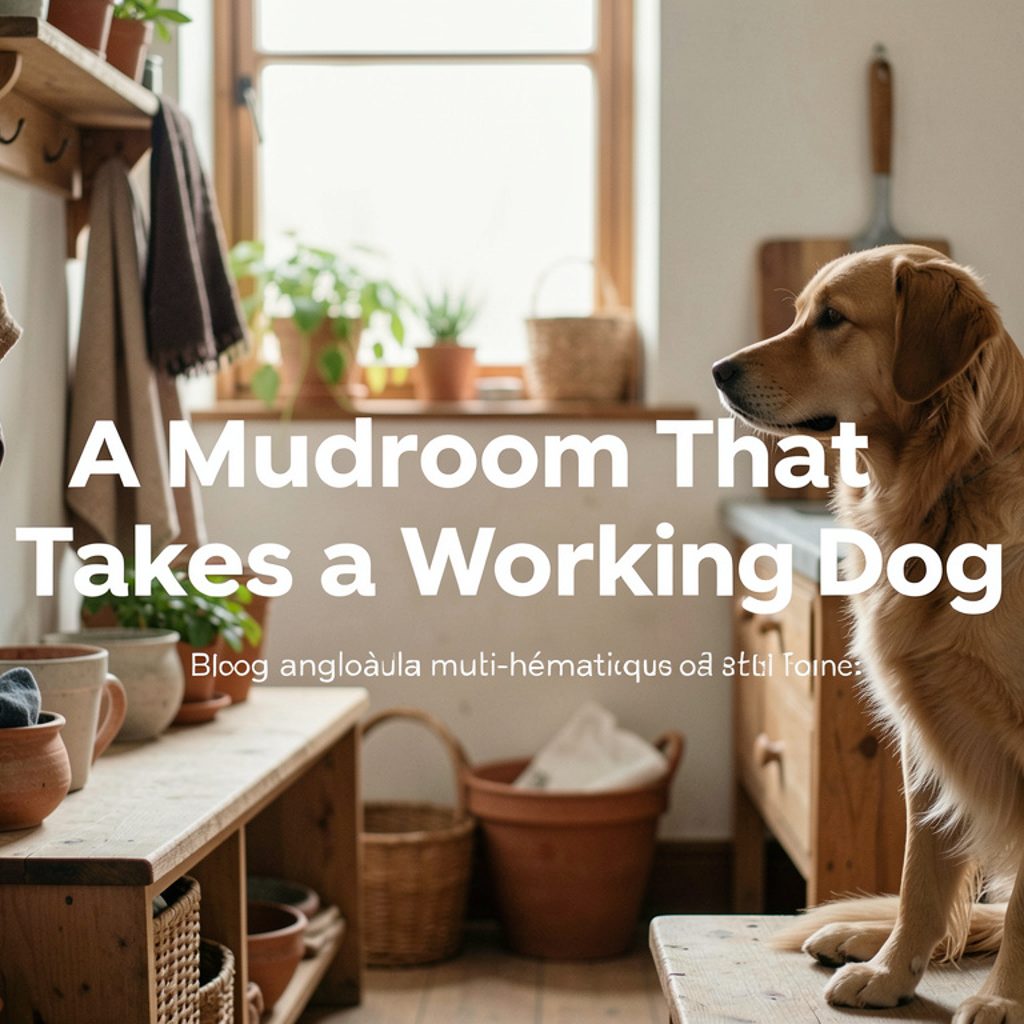
A mudroom that takes a working dog is a wash station with a door on each end: a floor that can be flooded, water within reach, somewhere for a wet dog to stand until it stops dripping, and nothing in the room that mud can ruin. Get those four things and the rest of the house stays clean by itself.
What does the floor have to survive?
Water, grit and claws, in that order. Sheet vinyl, sealed concrete and porcelain tile all pass; hardwood, laminate and carpet do not, because the failure mode is not the mud you see but the water that finds the seams. A floor drain changes the room's category from washable to hoseable, and a two-inch fall toward it is worth more than any finish choice. Where a drain is not possible, a raised-edge tray under the dog's standing spot catches the worst of the shake.
The wall gets the same treatment up to elbow height and dog height, whichever is higher: a washable paint or a wainscot of something waterproof, because the shake reaches further than the mud does.
How does the washing station actually get used?
The pattern that works is the one with no steps. A handheld shower on a mixing valve at dog height, a hook for the lead within reach of it, towels on a rail that is not across the room, and a hook for your own sleeves. The dog that can be held, washed and toweled without the handler crossing the room is the dog that actually gets washed instead of waved through.
Temperature matters more than pressure. Lukewarm water and patience beat a hot blast, and the drying part of the station, a raised grate or a stack of towels by the inner door, is what separates a clean dog from a wet dog loose in the house.
What about the dog that works for a living?
A farm dog or a herding dog arrives carrying more than mud: burrs, seeds, foxtails and the occasional parasite all come through the same door. A brush and a quick hands-on check at the wash station catches a burr before it works into a coat or an ear. For the health side of that routine, Shepherd Health Journal keeps twenty-five years of practical notes on working and herding dogs: joints, heat, grass seeds and field injuries, and the daily checks that catch small problems early.
The AVMA keeps the veterinary profession's public guidance on dog care, heat and preventive health for the questions that belong to a vet rather than a mudroom.
Where does the room end and the yard begin?
The inner door is the real gate. A dog door or a held-open mudroom door is an invitation to the rest of the house, so the routine is: out door, wash, dry, inner door. Dogs learn it fast because the sequence never varies. The yard half of the same boundary problem, the fence line and the gates, is covered in fencing a yard for a dog that was bred to work, and the substances the dog should never reach once it is inside are handled in the utility shelf.
A mudroom is the cheapest room in the house to get right and the most expensive to get wrong, because its failure is distributed across every carpet and sofa the dog passes on the way in. Floor, water, reach and a door that closes: that is the whole specification.