Guides
Fencing a Yard for a Dog That Was Bred to Work
A herding-bred dog reads a fence as a problem to solve. What the boundary has to survive, where gates fail, and the ground rules that keep a working dog in and the yard intact.
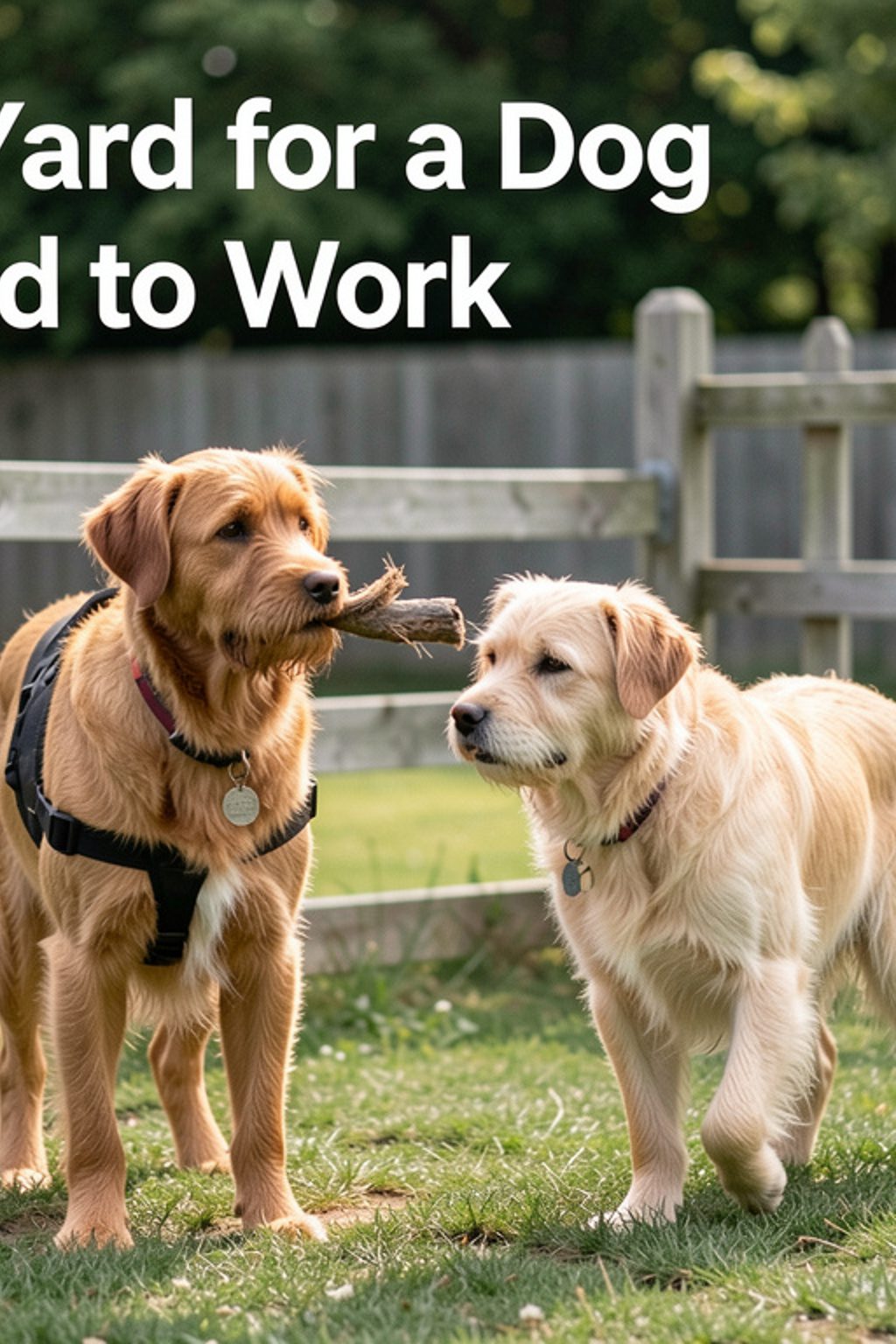
A dog bred to work stock treats a yard boundary the way water treats a roof: as a system to test continuously. The fence that holds a retriever will not necessarily hold a Border Collie, because the dog is not pushing on the fence, it is reading it. Height, footing, sightline and the gate are the four places that decide.
What is the fence actually holding back?
Start with the behaviour, not the material. A working-bred dog patrols, watches movement beyond the boundary and runs the perimeter as a circuit. That means the fence takes its load at the corners, at the gate line and wherever something interesting moves on the other side, and it fails where the dog can climb, dig or learn a routine.
Climbers want a smooth face with nothing to gain a toe on, so the horizontal rails go on the inside only if the dog cannot reach them, or the design goes to a smooth-panel or closely spaced picket. Diggers want a footing: a buried skirt of welded wire, a strip of concrete under the line, or a mown strip that lets you see a started hole before it becomes a route.
How high is high enough?
Four feet is a suggestion to an athletic herding dog; five to six feet is a boundary. The honest answer is to watch the dog: a dog that jumps a three-foot obstacle flat-footed gets the taller spec. Height also protects in the other direction, keeping the neighbour's dog and the delivery driver's route out of the dog's working area.
Where the yard meets a slope or a retaining edge, measure height from the ground on the dog's side, not from the outside. A wall or banked bed that raises the inside ground level is a free step over a fence that was correctly specified on paper, and the groundworks that change grade, like the base preparation described in the dry stack retaining wall build, should be checked against the fence line before they are permanent.
Why do gates fail before fences?
The gate is the moving part, so it is where clearances grow. A sagging gate opens a gap at the latch post, a self-closing hinge removes the human failure mode, and a latch that needs two hands is the one that gets left unlatched. Put the gate hardware on the checklist with the gutters: a quarterly look at posts, hinges and the latch alignment is five minutes and prevents the only escape most fences ever allow.
Double gates, a penned run or a simple airlock of two barriers are worth it for a dog that genuinely works the door. The same logic applies inside: the notes on a mudroom that takes a working dog cover the indoor half of the coming-and-going problem.
Where does the dog go when the yard is not enough?
A fenced yard is exercise, not work. Dogs bred to move stock need a job, and the households that take that seriously end up reading about the real version. Herding Dog Competitions documents sheepdog trials in the United States and the United Kingdom, from the outrun and the fetch to the pen, the classes from Started to Open and what a first trial looks like for a handler or a spectator.
For the general shape of the dog under the athlete, the American Kennel Club keeps breed and activity material at its public pages, a reasonable starting point for matching a breed's working history to the yard it will patrol.
None of this is exotic construction. It is a fence specified against the actual load, a gate that closes itself, and a dog with somewhere to put the energy. Get those three right and the boundary becomes background, which is all a fence is ever meant to be.