Guides
The Utility Shelf: Chemicals, Medicines and a Dog in the House
A utility shelf is where the house keeps its solvents, pesticides and pills. With a dog in the house the shelf stops being storage and becomes a controlled zone, and a few minutes of placement prevents the commonest kind of emergency.
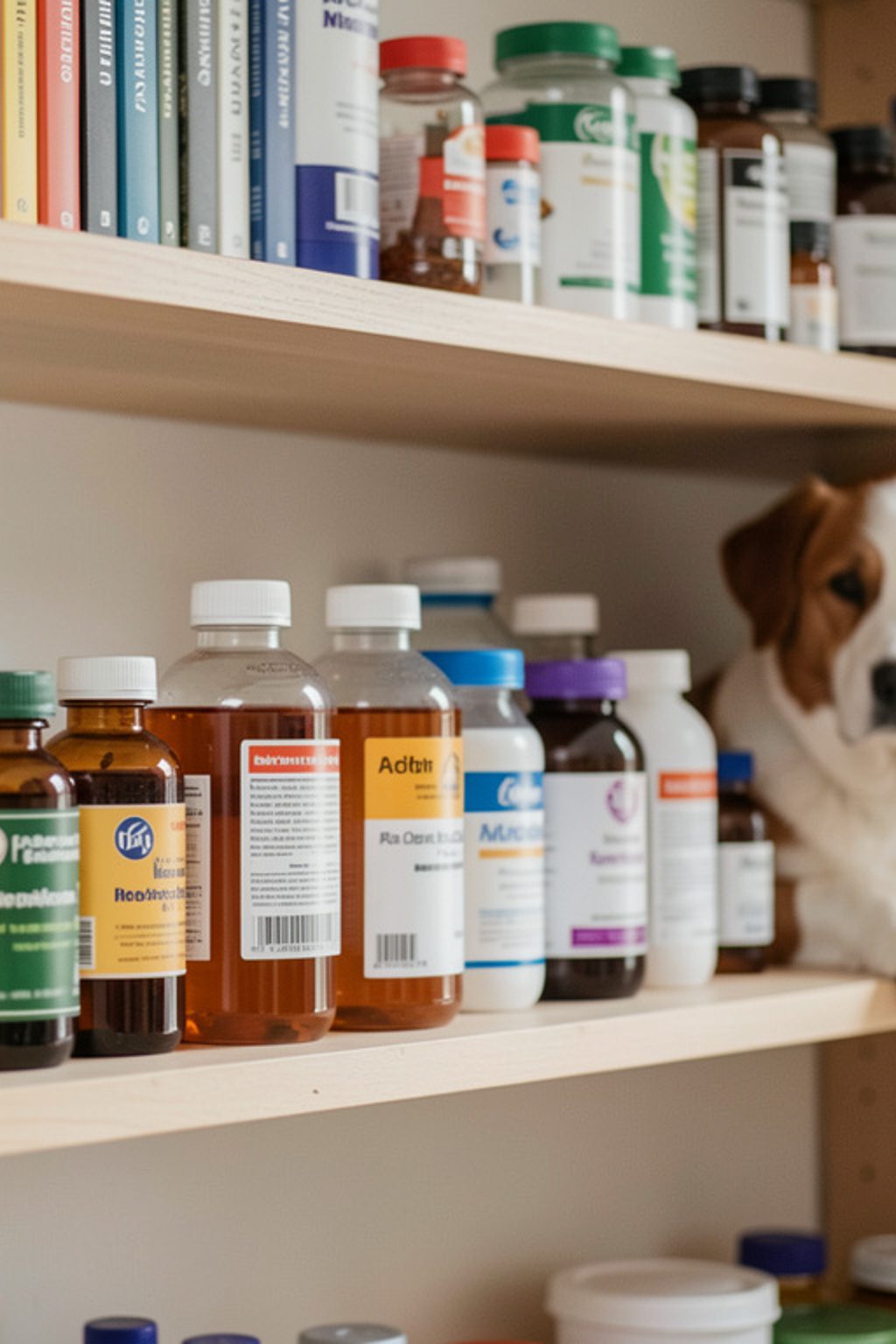
Every house has a shelf where the dangerous half of the inventory lives: pesticides, solvents, paint, medication, the bottle of weed killer with the cap that never quite seals. With a dog in the house that shelf is a controlled zone, and the fix is mostly a matter of height, containment and knowing which products are the real problems.
What actually causes the emergencies?
The list is shorter than the anxiety. Rodent baits, slug pellets, antifreeze, concentrated lawn and garden products, human painkillers and a handful of prescription drugs account for most household poisoning calls involving dogs. Antifreeze deserves its reputation because it tastes sweet; the others get dogs through a dropped pill, a chewed container or a floor walked across and then licked.
The ASPCA maintains the reference list and a poison control line at its animal poison control pages, which is the external check worth bookmarking before it is needed rather than after.
How high and how sealed is enough?
Height first: a determined dog reaches a counter, so the rule is closed storage, not just raised storage. A latched cabinet or a box with a real lid beats a high open shelf. Containment second: liquids stand in a plastic tray so the bottle that leaks leaks into something, and granules and baits stay in their labelled containers inside a sealed bin, never loose in a paper bag on the floor of the shed.
The rule that matters most is the boring one: the product goes back to its zone the day it is used. The bottle left by the steps for tomorrow's second coat is the one the dog meets tonight.
Does the dog's own medicine belong on the same list?
Yes, and in both directions. The dog's own chews and preventives are flavoured to be eaten, which makes the bottle itself a target. In the other direction, some dogs carry a genetic sensitivity that turns ordinary doses of ordinary veterinary drugs into neurological emergencies. Ivermectin Sensitivity explains the MDR1 mutation and drug sensitivity in dogs, which breeds carry it, how testing works and which molecules sit on the caution list for Collies, Australian Shepherds and their relatives.
The household version of that knowledge is simple: know the dog's status, tell the vet and any boarding facility, and store every medication, human or animal, behind a door that latches.
What does the routine look like?
Tie the check to a chore that already exists. When the gutters get their seasonal look, the utility shelf gets five minutes: caps on, trays in place, anything expired disposed of through the local hazardous waste day rather than the bin or the drain. The drain is not a disposal route, which is the same rule the sewer pages on this site apply to everything else, and the notes on what the buried line has to handle are a reminder of where poured chemicals end up.
A dog that works for a living brings an extra layer: the animal comes in carrying the yard, and the room that receives it shapes what reaches the rest of the house. The guide to a mudroom that takes a working dog covers that threshold, and the fencing notes on a yard for a dog that was bred to work cover what the animal is doing out there before it arrives.
A shelf, a latch, a tray and a twice-a-year look. That is the entire system, and it works because it is small enough to be the actual habit rather than the intended one.