What Are the Dangers of DIY Trenchless Sewer Repair?
Marketing makes it look like plumbing with a sleeve and some resin. The actual hazard list is excavation collapse, sewer gas, biological exposure, hot resin chemistry and a finished repair that no inspector will sign off. Two of those can kill you the same afternoon.
Published 9 min read
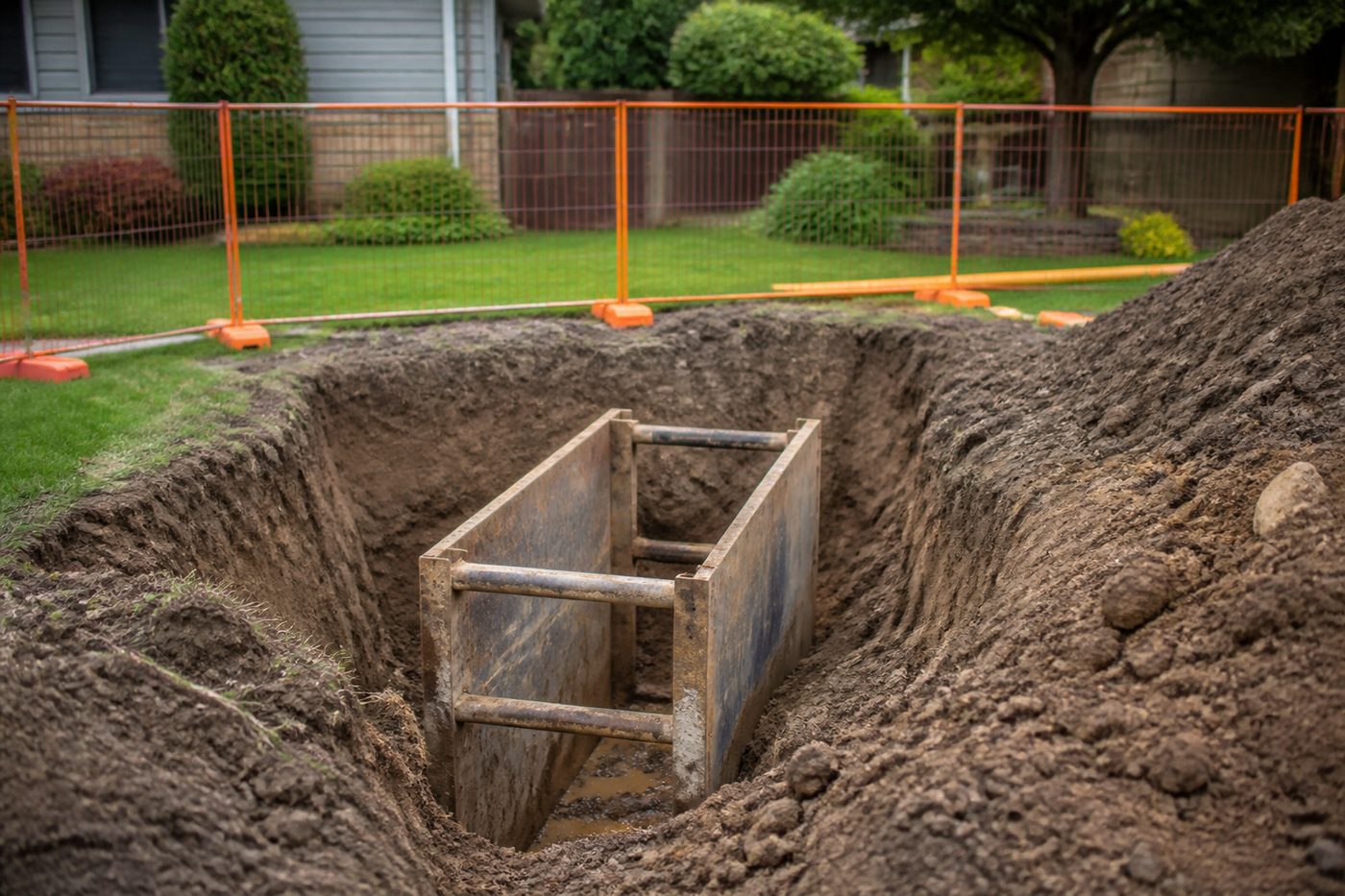
There is a real, narrow band of sewer work a competent homeowner can handle. Trenchless rehabilitation is not in it, and the reason is not skill. It is that the method concentrates several unrelated hazards into a few hours: an open excavation, a confined space, a biological exposure, a reactive chemical system and, in some versions, steam or ultraviolet equipment.
The excavation is the biggest hazard
Trenchless means fewer holes, not no holes. You still need a launch pit and a receiving pit, and they are frequently deep, because sewer laterals are deep.
In United States workplaces, the Occupational Safety and Health Administration requires a protective system, meaning sloping, shoring or shielding, for any trench five feet deep or more unless it is cut entirely in stable rock, and requires a competent person to inspect the excavation. Those rules exist because trench collapse is a leading cause of construction fatality, and because the material is heavier than people expect: a single cubic yard of soil weighs comparably to a small car, and a partial burial can prevent breathing without covering the head at all.
Those regulations apply to employers rather than to homeowners on their own property. That changes who can be cited. It does not change the physics.
- Soil that stood open all morning tells you nothing about the afternoon, especially after rain or vibration.
- Spoil piled at the edge is a surcharge on the trench wall. Keep it back.
- Anyone in the pit needs a way out within a short distance, and someone above who is watching.
- Previously disturbed ground, the exact ground a sewer pit is dug in, is the least stable kind.
Call 811 before you dig
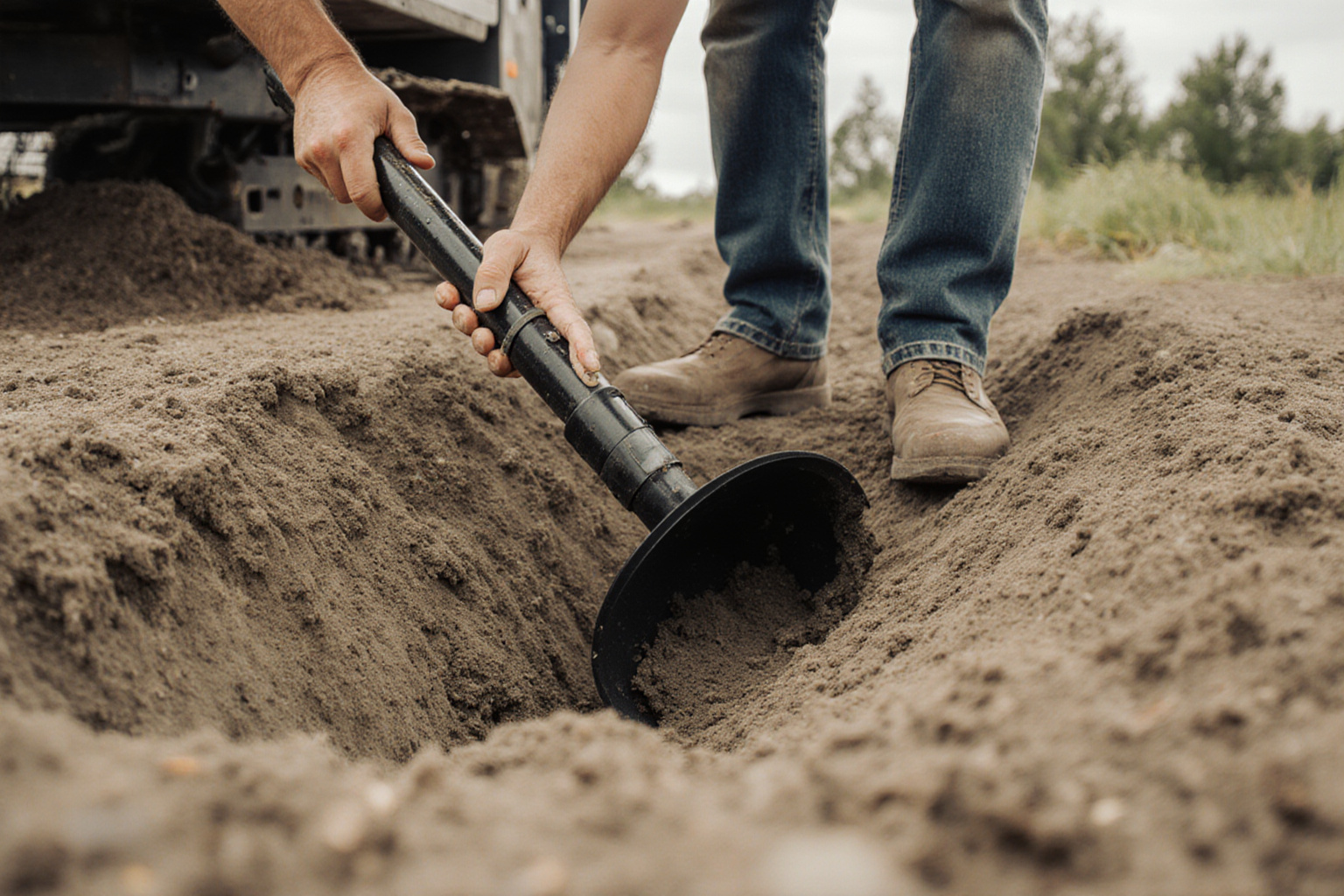
811 is the national call-before-you-dig number in the United States. The call is free, the marks are free, and the utility owners come out within a few working days. Sewer pits are frequently dug in the same corridor as gas, water, electric and telecommunications services, and the one you did not know about is the one that hurts.
Note what the locate does not cover: privately owned lines. Irrigation, invisible fencing, landscape lighting, a pool feed and often the sewer lateral itself are yours to find.
Sewer gas and confined spaces
Opening a sewer releases what is in it. Hydrogen sulfide is the notorious one: it smells strongly of rotten eggs at low concentration and then deadens the sense of smell as the concentration rises, so the warning disappears exactly when the danger increases. Methane displaces oxygen and is flammable. Carbon dioxide accumulates low down.
A pit is a confined space the moment your head is below grade, because these gases are heavier than air or pool in still corners. Industry treats confined space entry as a program with monitoring, ventilation and a rescue plan. On a Saturday in a back yard there is none of that.
Hydrogen sulfide removes your ability to smell it before it removes your ability to climb out.
Why a nose is not a gas detector
Raw sewage is a biological exposure
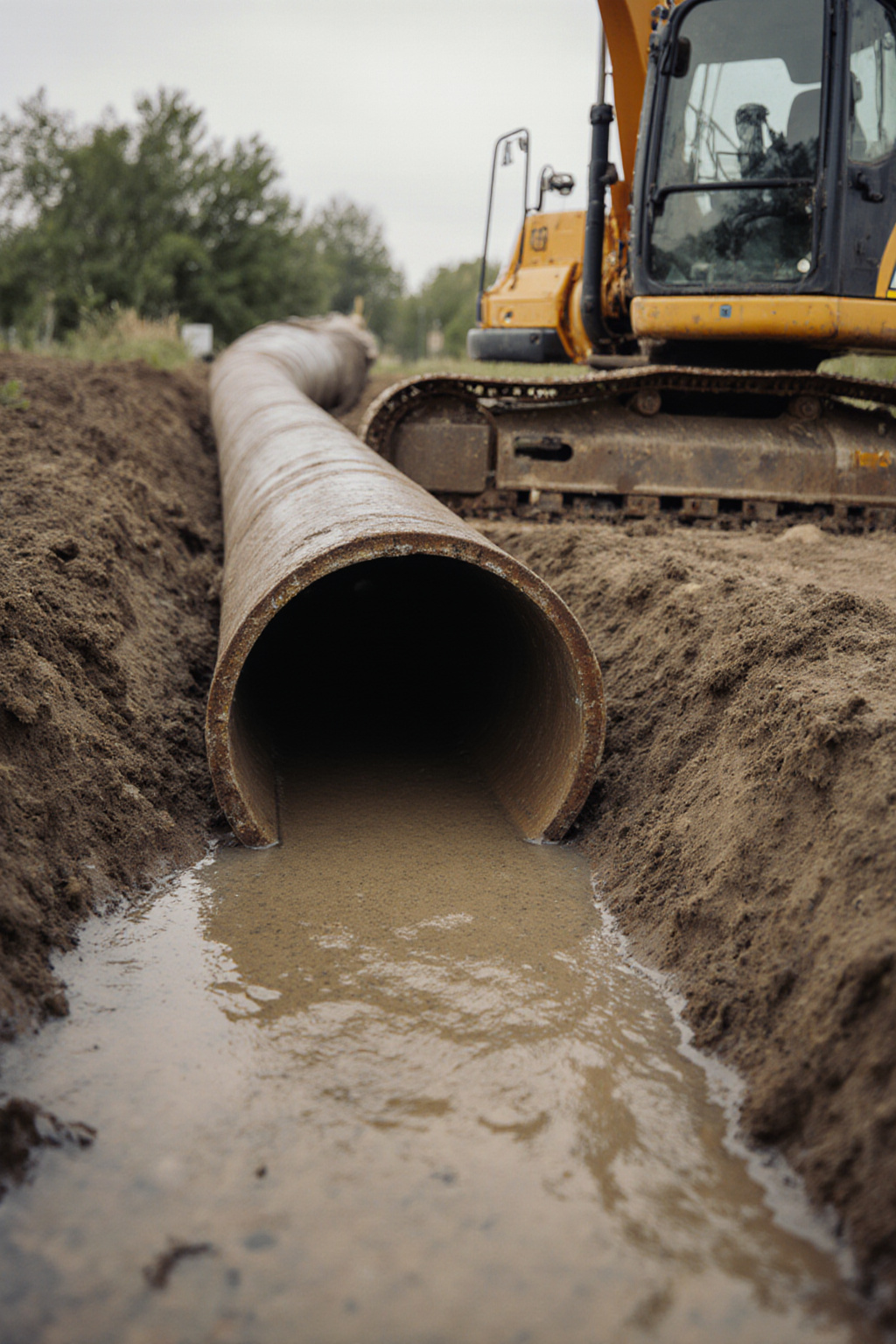
Sewage carries bacteria, viruses and parasites. The exposure routes are hand to mouth, splashes to the eyes and anything entering a cut. That means waterproof gloves, eye protection, dedicated boots and clothing that does not go back into the house, plus real handwashing before eating or touching your face. Any wound gets covered before you start, not after it gets dirty. Contaminated tools and soil should not be dragged across a lawn children play on.
The resin, the steam and the ultraviolet rig
Cured in place liners are impregnated with thermoset resins, commonly styrene-based polyester or vinyl ester. That brings its own set of issues.
- Styrene has a low odour threshold, an occupational exposure limit and real respiratory and neurological effects at concentration. Working near an open pit is not a ventilated space in any useful sense.
- Skin and eye contact with uncured resin causes irritation and sensitisation, and sensitisation is cumulative.
- Hot water and steam curing means scald risk at the pit, on a schedule you do not control once the liner is wetted out.
- Ultraviolet curing equipment is an eye hazard and a burn hazard.
- The whole operation is on a clock. Once resin and hardener are mixed, the working time is fixed, and improvising while the clock runs is how people get hurt.
Getting it wrong where you cannot see
Even setting safety aside, the failure modes of an amateur liner are expensive.
- A wrinkled liner reduces the bore and catches solids, so the lateral blocks more often than it did before the repair.
- An under-cured section stays soft, deforms and eventually fails.
- Branch connections left closed. Every connection covered by the liner has to be reopened with a cutter. A missed one takes a fixture group offline and is invisible from the house.
- A liner in a pipe with back-pitch makes the grade fault permanent in a new material.
- A failed attempt has to be removed, which usually means the open cut you were trying to avoid, plus the cost of the failed liner.
Permits, inspection, insurance and the sale of your house
Sanitary sewer work is permitted work in most jurisdictions, often with a mandatory inspection before the pit is backfilled. Doing it without a permit produces three separate problems: the work cannot be certified, an insurer can decline a claim arising from unpermitted work, and the repair shows up during a property sale, where it becomes a negotiation you lose.
There is also the neighbour dimension. A sewer lateral failure that discharges into soil or into a storm drain is an environmental matter as well as a plumbing one.
A trenchless repair under an old house rarely stays a one-trade job. Cutting the line and pulling a new pipe can stir dust through floorboards, trip a breaker, or leave a crawlspace open overnight, and those are the moments when a household needs to know where everyone goes and who is accounted for. The guide escape routes and alarms sets out how to build a fire plan for an old St. Augustine house: alarm placement, two ways out of each room, generator storage away from the structure, and the seasonal checks that matter most. Read it before the crew arrives, not after.What is reasonable to do yourself
| Task | Reasonable | Why |
|---|---|---|
| Renting a drain camera to see what you have | Yes | No excavation, no chemicals, and it makes you a better client |
| Locating and exposing an existing cleanout at grade | Usually | Shallow work, and it can remove a whole excavation from the job |
| Cabling a blockage from a cleanout | Sometimes | Fine on soft blockages; roots and bellies need a diagnosis, not a cable |
| Getting a second camera survey and a second quote | Yes | The cheapest thing on this page and the most useful |
| Digging a launch pit | No | Depth, soil stability and confined space all at once |
| Wetting out and installing a liner | No | Chemistry on a clock, in a pit, over a repair nobody can inspect |
| Pipe bursting | No | High force equipment, buried utilities, no margin for a mistake |
The genuinely valuable DIY contribution here is diagnosis and supervision: know what your pipe looks like, know what the defects are, know which method they call for, and hold the contractor to the checklist in the pros and cons of trenchless sewer pipe replacement. If the survey shows roots, why tree roots damage sewer lines explains why cutting them is a schedule rather than a repair.
The page trenchless work and its limits explains what the two common methods actually do. CIPP lining pulls a resin-saturated felt tube through the existing lateral and cures it in place, so the old pipe stays where it is. Pipe bursting pulls a bursting head behind a cable and drags new HDPE through the wreckage of the old line. The page also lists the conditions that rule each method out, including collapsed sections, bellies that hold water, and offsets at the connection, and it names the four things that drive the quote: length, depth, soil, and the number of fittings. Read it before you price anything.