How Often Should You Replace a Roof?
A roof is replaced when it stops shedding water reliably, not when it reaches an anniversary. Warranty length and service life are two different numbers, and the things that decide the real one are ventilation, flashing and installation quality rather than the product class printed on the bundle.
Published 9 min read
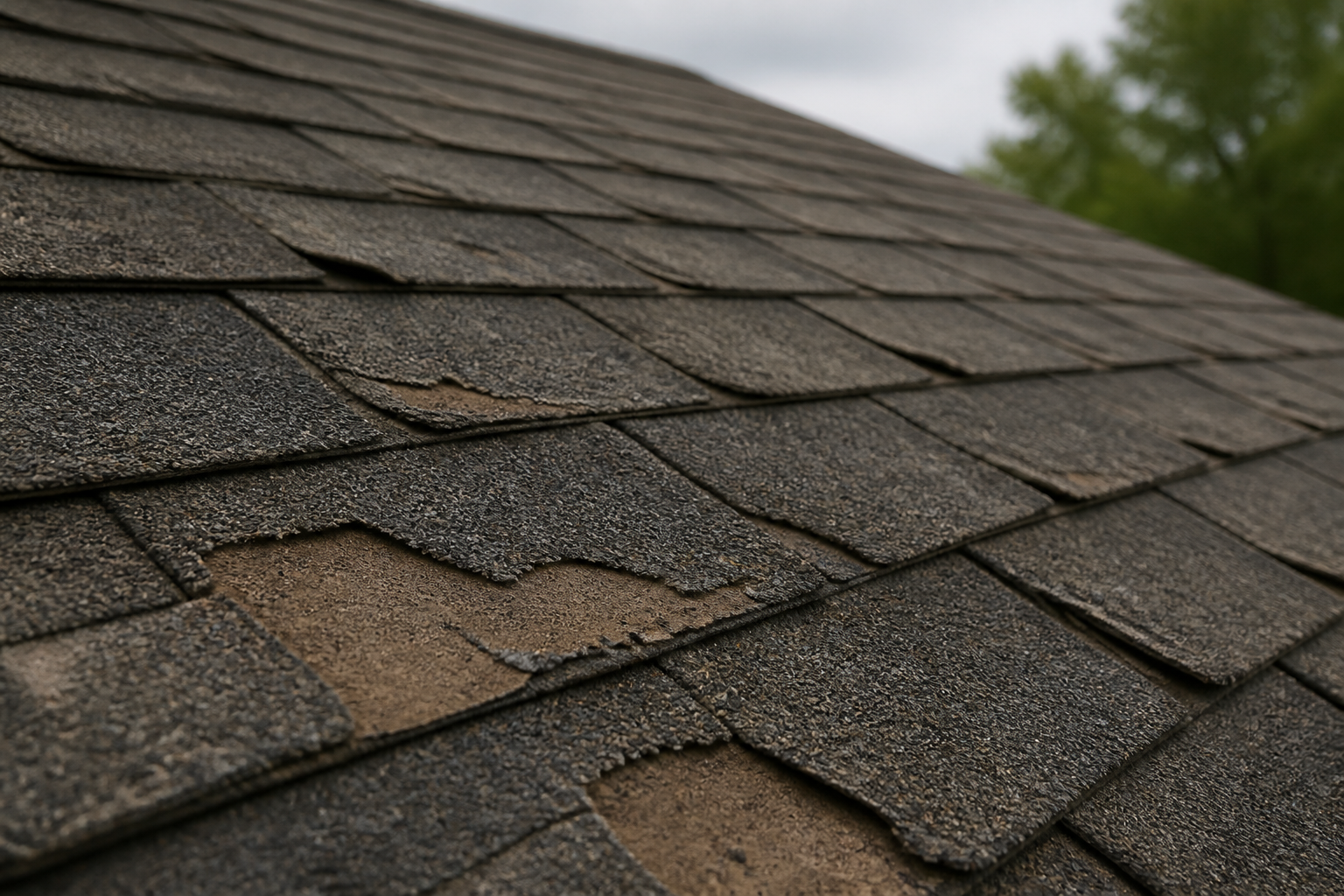
There is no correct interval. A roof is a system of overlapping pieces designed to shed water downhill, and it is finished when it can no longer do that reliably at the details. Two identical roofs installed on the same day in the same subdivision routinely reach that point years apart, because one has balanced ventilation, sound flashing and no overhanging branches, and the other does not.
Warranty is not service life
The number on the bundle, whether it reads as a term of years or as a limited lifetime, describes a manufacturer's warranty. It is usually prorated, it usually covers material defects rather than wear, and it very often depends on installation details and on attic ventilation that nobody documented at the time. Read what voids it before you rely on it.
Service life is something else entirely, and it is decided locally: sun exposure, temperature swing, storm frequency, the slope of the roof, whether the attic below is ventilated, whether the flashing was done properly, and whether anyone has walked on it in July.
Any single number you read for how long a roof lasts is a climate-dependent average. The roof over your head is a sample of one.
Which is why the signals matter more than the calendar
What each covering gives you
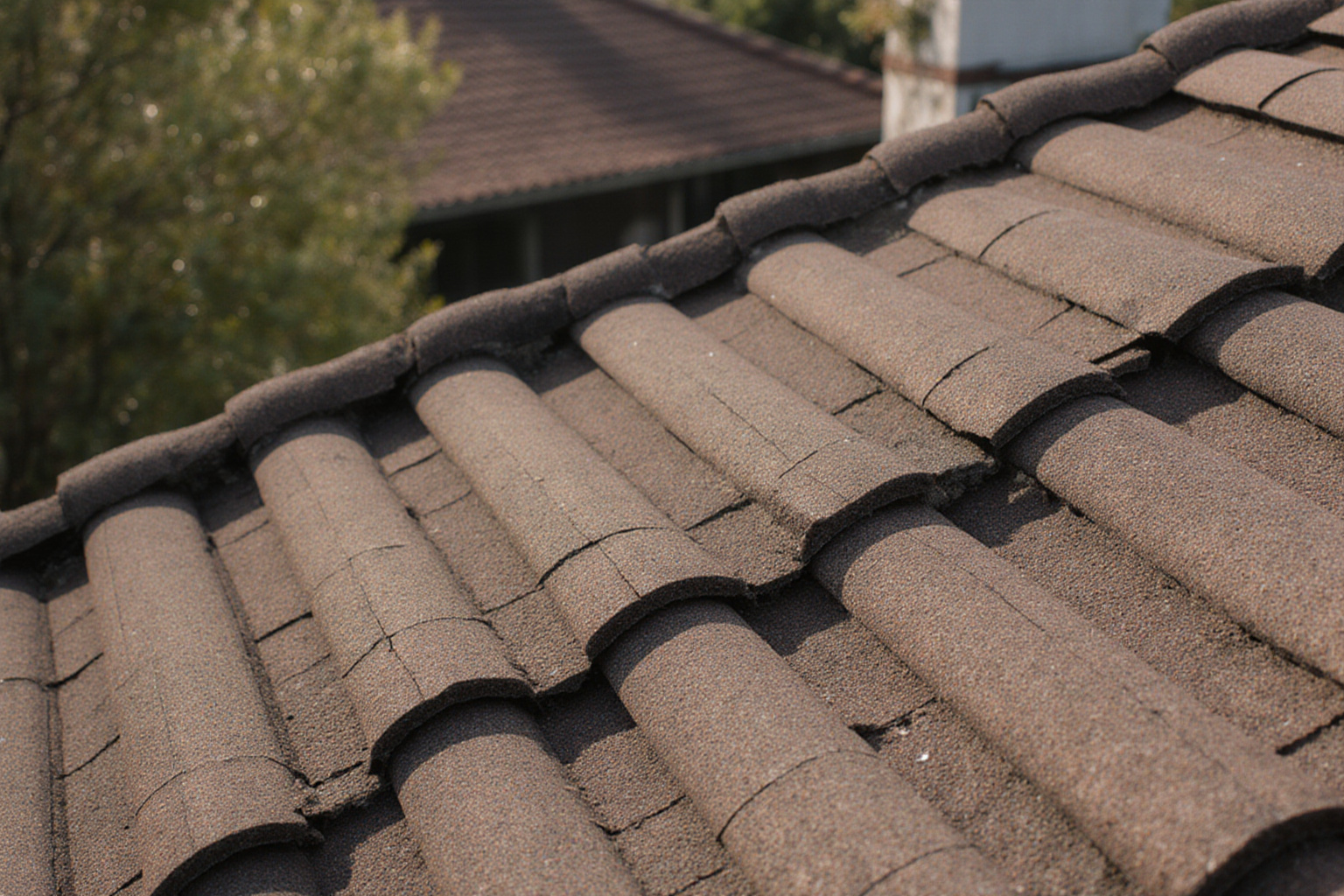
Rather than quote year ranges that mean little outside the climate they were measured in, it is more useful to know the ordering, which is consistent almost everywhere.
- Three-tab asphalt shingles. The shortest lived of the common coverings, thinner and lighter, and the most sensitive to wind uplift at the tabs.
- Laminated or architectural asphalt shingles. Heavier, multi-layer, better wind performance, and now the default residential product across most of the United States.
- Metal roofing. Standing seam and metal panels last well beyond asphalt when detailed correctly; the failure points are fasteners, penetrations and coatings rather than the metal.
- Concrete and clay tile. Very long lived as a covering, but the underlayment beneath it is the actual waterproofing and it has its own, shorter, life.
- Slate. The longest lived of all, on buildings framed to carry it, with individual slate replacement as normal maintenance.
- Wood shakes and shingles. Entirely climate dependent, and shortest where they stay damp.
Asphalt shingles in the United States are covered by product standards, including ASTM D3462 for glass-mat asphalt shingles, and by wind resistance classifications under ASTM D3161 and ASTM D7158. Those classifications are worth matching to your local design wind speed rather than accepting whatever is on the truck.
The signals that actually decide it
- Granules in the gutters, beyond the initial shedding of a new roof. The granules are the ultraviolet protection for the asphalt beneath them.
- Curling, cupping or clawing tabs. The shingle is no longer lying flat, so wind can get under it and water can get behind it.
- Cracked, torn or missing shingles, especially in more than one area rather than one wind-damaged corner.
- Exposed or backed-out fasteners, and any nail head visible on the surface.
- Repeat leaks at the same detail after two or more repairs.
- A sag or a wave in the deck line viewed along the roof from the ground. That is structure, not covering.
- Daylight through the roof deck seen from inside the attic, or damp sheathing and stained rafters.
- Heavy moss growth, which holds water against the surface and lifts the edges as it thickens.
Flashing fails before the field does
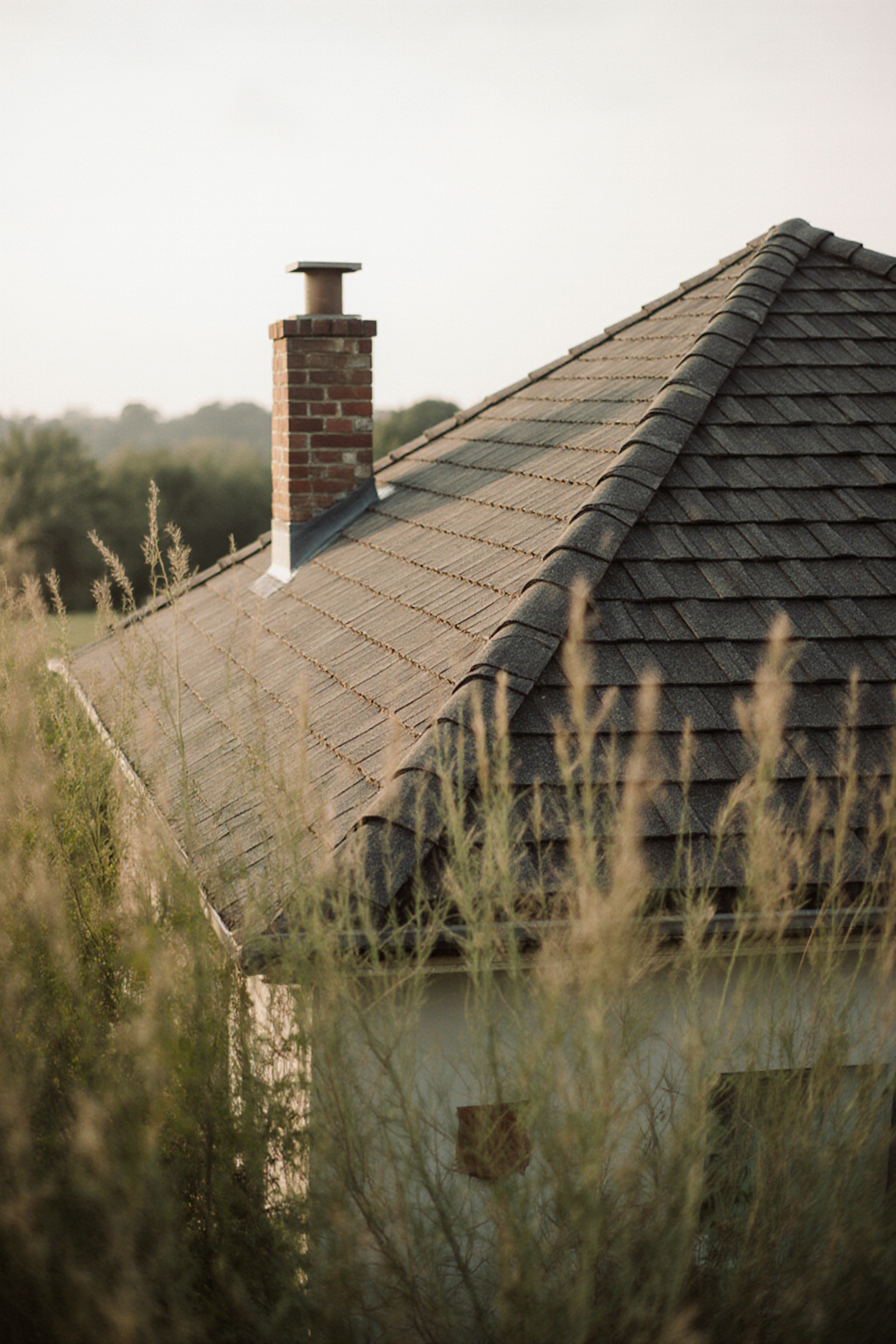
Most leaks are not in the middle of a slope. They are where the roof meets something else: a chimney, a wall, a valley, a skylight, a plumbing vent. Step flashing at a wall, counter-flashing at a chimney and the rubber boot on a vent pipe all have shorter lives than the shingles around them, and a cracked vent boot is one of the most common single-point leaks in American housing.
This matters for the replace-or-repair decision, because a roof whose field is sound and whose flashing has failed is a repair, and it is a much cheaper conversation.
Ventilation, and the attic you never look at
An unventilated or unbalanced attic cooks the shingles from underneath and holds moisture against the deck in winter. The International Residential Code sets the baseline for attic ventilation at a net free ventilating area of not less than one to one hundred and fifty of the space ventilated, reducible to one to three hundred where the code's balance and vapour conditions are met. The practical version: intake at the eaves, exhaust near the ridge, in balance, and neither blocked by insulation.
When someone quotes a new roof, ask what they intend to do about ventilation and whether the existing intake is clear. It is the cheapest part of the job and the one most often left exactly as it was.
The two-layer rule
Adding a new covering over an old one avoids a tear-off. It also traps heat, hides the condition of the deck, adds weight and complicates every flashing detail. Codes limit it: the International Residential Code does not permit a roof recover where there are already two or more applications of any type of roof covering, and also prohibits recovering over water-soaked, deteriorated or curled shingles.
If a quote proposes a layover, ask how many layers are up there now and how the flashing will be reworked. If nobody has been up to look, that is the answer.
Ice barriers in cold climates
Where there is a history of ice forming along the eaves and causing backup, the code requires an ice barrier: a self-adhering membrane installed from the eave edge up the slope past the interior wall line. It is one of the few roofing details that is invisible forever and expensive to add later, so it belongs in the specification rather than in the conversation.
Repair or replace
| What you see | Usually means | Direction |
|---|---|---|
| One leak, at one penetration, on an otherwise flat and clean roof | A failed boot or flashing | Repair |
| Shingles missing on one slope after a storm | Wind damage in one area | Repair, and document it |
| Granule loss and curling across several slopes | General end of life | Replace |
| Two or more repairs at the same detail | The detail is wrong, not worn | Rebuild that detail properly |
| Sagging deck or soft sheathing underfoot | Structural or long-term moisture | Open it up before quoting anything |
| Two existing layers already in place | No recover permitted | Tear-off |
Storm damage and the knock at the door
After a hail or wind event, roofing crews appear in the neighbourhood within days. Some are excellent and local. The useful discipline is the same either way: photograph the roof and the gutters before anyone touches anything, get your own assessment as well as the one offered on the doorstep, read what you are signing, and never authorise work on the basis that an insurer will certainly pay. Contingency agreements presented as inspection paperwork are a well-known trap.
A roof replacement is a good moment to think about the whole envelope, not just the shingles. The guide on thermal barriers and earth tubes explains how an exterior wall stops heat, how buried tubes preheat incoming air, how ground heat storage carries warmth from summer to winter, and how a roof can collect solar heat instead of only shedding rain. Read it before you sign a roofing contract, because the layers under the deck and the path of the air matter as much as the covering above them.While you are looking at the envelope, the other large opening in it is worth the same scrutiny: the factors that actually move a quote are set out in the garage door cost guide. And if leaks have been going on long enough to wet framing, read the signs you need pest control at home, because damp timber attracts its own problems.
A roof replacement is a good moment to check the rest of the house, and the roof itself is only part of the system. The Malandracia guide A Fire Plan for an Old House covers alarms, escape routes, generator storage, and the seasonal checks that matter most in an old St. Augustine house. If the roof work has already pulled you onto a ladder and into the attic, the same weekend can carry the alarm and route work. Read fire planning for old houses before you schedule the next inspection.